Friday, November 6, 2015

5 Tidbit Friday: November 6, 3015

FOLLOWING SHARE ONLINE


We’ve gotten some helpful feedback about the SHARE blog recently. We apologize that the “Sign-Up by Email” feature is not available on all web browsers. If you’d like to receive updates in your inbox, and don’t see the sign-up box in the upper-right corner of your screen, please send an email to kirk.davis@theshareunion.org  


TRICK-or-TREAT


During lunchtime last Friday, UMass Memorial’s Central Billing Office opened its doors for the costumed children of employees to trick-or-treat among the cubicles . . . and receive candy from the jesters and bakers and witches and pirates who work there. What a way to transform the workday! What a fun family event! So many adorable minions! Nice work, CBO.


FREE CLASSES, IT’S TRUE


More details have been requested about the recent tidbit touting free online classes through edX.org.


  • The project was founded by Harvard University and MIT, and a number of colleges and universities have since joined in.
  • New courses are continually being offered.
  • The program does not adhere to a traditional academic calendar.
  • At any given moment, a few million students are enrolled in the courses, and the website promotes a variety of ways of interacting with other students in your class, wherever in the world they may be.
  • EdX offers certificates of successful completion, but does not offer course credit. Whether or not a college or university offers credit for an edX course is within the sole discretion of that school.


Signing up for a class is just about as simple as registering for the edX site and clicking on the course(s) you want to take. The EdX site has a useful video explaining how it works. (A couple of years back, I signed up for Harvard’s “Food and Science” course. Signing up was fairly simple and straightforward. Keeping up with the course-load after work, however, was trickier. But when else can you use your kitchen as a laboratory?)


REAL FAMILIES vs. WISTFUL SYSTEMS


This week, the Pew Research Center released a report about work-family balance in households that include a mother and a father. This prompted the Huffington Post to wonder why so many government policies and employers are stuck in “Leave It to Beaver” mode--notably highlighting that the US is the only developed country that does not offer paid family leave to new mothers. (Additionally, the article points out that “Almost 40 percent of kids in the U.S. live in a home with a single parent or no parent at all (for example, a grandparent's in charge), according to a different Pew study.”)


WE’RE NOT THE ONLY ONES

. . . keeping an eye on the labor-management partnership at Kaiser Permanente. In his address at the recent White House Summit on Worker Voice, President Obama stated, “Kaiser Permanente works with 28 different unions to provide good pay and benefits, but also educational programs, and avenues for employees to help improve quality and care throughout the company — which is why they’re considered one of the premier health organizations in the country.”


See you here next Friday! Hope you have a great weekend . . .

Friday, October 30, 2015

Five-Tidbit Frightday: October 30, 2015

Happy Halloween! And, too, happy Respiratory Care Week!

WHAT IS a HEALTHY DIET?


Halloween candy is bad for you. Vegetables, on the other hand, are good for you. Beyond these generally accepted facts, there’s a lot of conflicting dietary information out there. This week, the World Health Organization released a report saying definitively that processed meats cause cancer, and that, probably, red meat does, too. Related reports argue that you don’t need to give up those meats altogether. Fortunately, when you’re trying to figure out how to make sense of the varying and contradictory information, the Harvard School of Public Health offers this guide to deciphering media stories about diet.


NOT HEALTHY, BUT SAFE?


You know those stories about random, unsuspecting trick-or-treaters being poisoned (or worse) by tainted Halloween goodies? They’re all urban legends, every single one. Or so contends Dr. Joel Best, the world's leading expert on Halloween hostility, in this podcast.  


MAKING HALLOWEEN SAFER


Need ideas for getting creative to make your kids visible to car traffic? Also, if you plan to offer candies that are free of allergens and cross-contamination, don’t forget to review this year’s list of allergen-friendly candies, especially if you’re participating in the Teal-Pumpkin Project.


WHAT'S this CANDY WORTH?


This irreverent video guide to trading Halloween candy sums up the Halloween barter system pretty nicely.

HALLOWEEN AFTER-PARTY

And, finally, after you’ve applied the “Mom and Dad Tax” to the kids’ candy stash, and they’re tucked away in bed, you can consult this infographic for pairing candy and wine. (There are still a few studies that hold to the idea that the resveratrol in wine might be good for you, after all.)


See you here next Friday! Hope you have a great weekend.

Thursday, October 29, 2015

Recognizing Respiratory Therapists

Did you know that over one hundred SHARE members work as certified Respiratory Therapists? They are specialists in lungs and hearts and emergency care. They often manage life support for patients in the ED and ICU. They keep countless airways clear, and for that, we're very thankful.
This year, October 25-31 marks National Respiratory Care Week, an annual event that recognizes the respiratory care profession and promotes awareness of lung health issues and practices. Hats off to our own Respiratory Therapists!
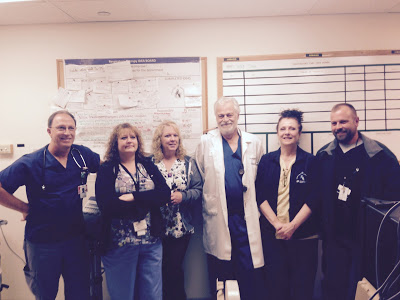
SHARE Respiratory Therapists on the Memorial Campus

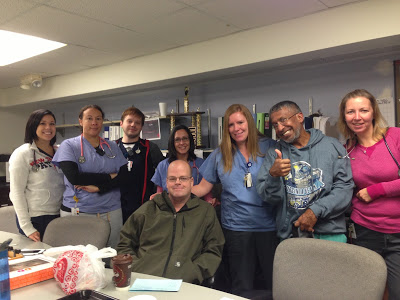
SHARE Respiratory Therapists on the University Campus

Friday, October 23, 2015

Five-Tidbit Friday: October 23, 2015

REMEMBER! UMASS MEMORIAL OPEN ENROLLMENT BENEFITS FAIRS
. . .  during the coming week
  • University Campus – October 27 (Tuesday)
  • Worcester Business Center – October 28 (Wednesday)
  • Memorial Campus – October 29 (Thursday)

LEAF-PEEPING
Do you have out-of-towners coming for a visit? Check out Massachusetts InstaFoliage for streaming foliage footage.


SELECTING a HEALTH INSURANCE PLAN

SHARE members, like many hospital employees, tend to be savvier about healthcare than most people. Still, if you’re considering changing health care plans this year, and would like to make sure you’re covering your bases before arriving at the benefits fair with your specific questions, here’s some useful online advice.
In this article, Consumer Reports directs people to begin by focusing on three big questions:
  • What does the plan cover?
  • How much does the plan cost? (for SHARE members, the plan costs are roughly the same, with the exception of the PPO plan, which costs more.)
  • Which doctors and hospitals are in the plan?
Nerdwallet provides a sensible and more detailed process for evaluating options.

SWEDEN’S SIX-HOUR WORKDAY

Among other things, American Unions can rightly claim credit for the weekend and the eight-hour workday. This piece in Forbes magazine makes an argument that we should push for more. (Or less, depending on how you look at it.)


MEDICAL ULTRASOUND AWARENESS MONTH

October is Medical Ultrasound Awareness Month. SHARE is happy to recognize our Ultrasound Technologists.


See you here next Friday! Hope you have a great weekend.

Thursday, October 22, 2015

2016 Contract Negotiations: Where We’ve Been, One Big Problem, and the Year Ahead

When UMass and then Memorial employees voted to form the SHARE union, the main goal was participation. People wanted a say in decisions that affect them at work.

With a merger, and with healthcare changing rapidly all around us since, there have been many decisions being made that affect SHARE members. As a new union and in the 18 years since those votes, we’ve checked off most of “the biggies” from our list:
  •  SHARE members wanted to make raises predictable, with raises every year, and a salary system that was fair, transparent, and moved people up to grade max over time.
  • SHARE members wanted to hold onto the benefits they had, in spite of the merger, especially:
    • Health insurance, keeping the 85%/15% premium split the state workers had had.
    • A defined benefit pension.
  • SHARE members wanted to land safely in new jobs when there were layoffs, especially in the highly uncertain times of the early merger. And we wanted to feel that seniority was valued equally no matter which campus you came from. 
  • SHARE members from Memorial and UMass wanted to have the same policies across campuses, without going to the lowest-common-denominators among those policies. And we wanted to continually improve on these policies.
We all know that there’s plenty more we can do to improve even further on those goals. Still, our achievements have been significant and hard-won. Congratulations to all of us for sticking together when our union has faced hard times and hard negotiations.

Changing How it Feels to Come to Work

While we have steadily, persistently ticked the goals off our list, there’s one important nut that we haven’t cracked: We really want to change how it feels to come to work every day.
  • We want to save lives and improve patient health to the best of our ability.
  • We want patients’ experience -- from making an appointment to paying the bill – to go smoothly and give the patients what they need.
  • We want to have fun at work
  • We want to be able brag to our neighbors that we work at UMass Memorial, to have the respect of our peers and leaders, and to leave work consistently with our heads held high.
SHARE wants to focus on that problem -- how to re-imagine and improve our entire work culture -- in our next contract negotiations.

Many forces combine to cause our work to be stressful and frustrating:
  • Constant change, and financial pressure that leads to “doing more with less”
  • Work systems that are complicated and wasteful rather than clear and efficient
  • An old culture of “command and control,” and a “shame and blame” approach to problems that make positive teamwork tough to establish
Changing how it feels to come to work is not a simple goal. We have lots to figure out, and we may need to try several approaches before we figure out what works. 

We Need Your Ideas!

We hope that all SHARE members will take part in this conversation as we prepare to tackle this difficult set of problems. We are starting with a survey for all SHARE members to get your thoughts, questions, concerns, and ideas.

We will negotiate about raises and benefits too – so there will be a lot going on in this coming year. We will set up lunch-time SHARE information meetings across the hospital’s campuses in the new year. You can also contact your SHARE reps and organizers through the SHARE office any time.

And of course, we will post updates here on this blog. Stay tuned…

2016 SHARE Member Negotiations Survey

We need to hear your opinions! Your thoughts, your ideas, your experiences! Please take the 2016 SHARE Negotiations Survey:


This survey kicks off our thinking about the upcoming contract negotiations. In the past, our contract surveys have been very useful -- giving us concrete information to use in negotiations, and figuring out what areas need the most work. This survey focuses on your day-to-day work experience -- what works well and what needs to be improved. We are trying to figure out how to improve how it feels to come to work every day. For more about where we've come from as a union, and our next challenges, click here.


Our current contract expires on September 30, 2016.  We will start negotiations with UMass Memorial sometime in the spring. After we collect SHARE members' responses to the survey in the next few weeks, we will use the results to help set the priorities for negotiations. There will be plenty of time to talk about those priorities at lunch-time information meetings in the new year.


The survey takes about 10 minutes. Please fill it out, and encourage your co-workers to do the same!

Friday, October 16, 2015

Report from ThedaCare

As we prepare for SHARE’s contract negotations with UMass Memorial in 2016, we want to know what other hospitals are doing. We are looking for good ideas that could:


  • Make SHARE members’ work easier, 
  • Increase SHARE members’ “say” at work, and 
  • Improve how it feels to come to work every day.

I visited the ThedaCare hospitals in Wisconsin last week and it was quite inspiring. They believe in two main ideas:

  • Continuous Improvement: They say, “Improving the work is the work.”
  • Respect for People in everything they do.

[For another SHARE perspective on ThedaCare, see this previous blog post]


Their Friday morning "Team Report Out and Celebration" made a big impression on me. Every week, a few teams of front-line staff spend 3 or 4 full days to work on improving some process in their department. At the end of that week, in front of a couple of hundred people, the teams report on what they did. 


Last Friday there were 3 teams reporting out:


  • A PCA (ER Tech), a Respiratory Therapist, and an RN from the ED spent the week re-designing several patient rooms for higher acuity patients. By stocking more supplies in the room, staff now have to leave the room an average of twice per patient, instead of the average of 9 times they were going in and out to get supplies before the re-design. Clearly this is good for the staff and the patient. They improved respect for people, both staff and patients, further by setting up the room so that staff don’t have their back to the patient when looking at the computer, and by improving the room’s ergonomics to decrease staff injuries. 
I really like that front-line staff do the improvement work because they know their work best, and that they have time away from their regular duties for it.
  • RNs from the maternity units on two campuses worked together for the week to figure out why their number of CLABSIs (central line associated blood stream infections) were increasing. They figured out better processes (or “standard work” as they call it), and trained each other. They emphasized "respect for people" in respecting different levels of experience among the staff – with no blame – and giving people the tools and training they need to do their jobs. 
I love it: fix a bad process, don't shame and blame an employee.
  • The Root Cause Analysis (RCA) team re-designed their process to make it faster. These process improvement coaches (like the CITC coaches at UMass Memorial) are on-call for an adverse event. We heard the story of a patient having an assisted fall off an OR table. Right after it happened, a staff person was posted on either side of all OR tables to make sure it couldn’t happen again until they figured out what went wrong. The RCA team would arrive immediately to talk to people about what happened before everyone forgot. Then the RCA team leads a root cause analysis to change how the work is done to make sure that a fall like that can’t happen again.
They see a problem is an opportunity for improvement -- that's a positive outlook that I'd love to see more of at UMass Memorial.

Dr. Dickson leads trips to ThedaCare as an example of the direction he wants our hospitals to go. I agree – they have some very good ideas and it was impressive to see those ideas in action. 

As we collect experiences from other hospitals and other unions who are working to transform healthcare, I’m especially interested in the question: How do we there from here? More on that question to come...