Friday, October 16, 2015

Looking Back: An Earlier Trip to ThedaCare

“Three jumbo jets,” my co-worker, SHARE staff-organizer Will Erickson, said to me, just about a year ago. “That's how many people we kill every day in this country, despite having the supposed best healthcare system in the world.” It’s a rough quote of something that he had heard during his own trip to check out Thedacare. Now that SHARE staff-organizer Janet Wilder is just back from her visit to Appleton, I'm reminded of this conversation. I think it provides some useful context for Janet's more recent report. Here are some of Will's impressions:


KD: What is ThedaCare?


WE: ThedaCare is a mid-sized hospital system in northern Wisconsin. It's got about 5500 employees. So, it's half the size of our place, but spread out. The real reason Thedacare is interesting is because it went from being, you know, a decent hospital, and it became one of the first hospitals in the country -- in the early aughts, under the leadership of this guy John Toussaint -- to try to figure out why factories make so many fewer errors than hospitals . . . despite the fact that hospital staff are so extraordinarily well-trained.


KD: Factories?


WE: I think John Toussaint is an interesting guy. When he became CEO, he figured, you don't get to be CEO forever, so you need to pick one thing that you can work on. Basically he was to bring Lean into the hospital. He did it because he was so horrified by the degree of death and disability that our healthcare system creates. You know healthcare is the third leading cause of death in the country? You’ve got heart disease, then cancer, and then being a patient. Only so many of these are like “oopsie” medication errors. They’re system errors, times when the field of medicine knew what would have saved a person, but that thing didn’t get done.


KD: So ThedaCare’s reputation grew out of an idea that hospitals should stop allowing unnecessary deaths?


WE: Basically, yes. That's what he Toussaint kept saying over and over while we were there: three jumbo jets.  That's how many people we kill every day in this country, despite having the supposed best healthcare system in the world. That defect rate would not be tolerated in any other industry. So Toussaint figured, you don't get to work on everything--so my thing, the thing that I was gonna do--was figure out how to eliminate those kinds of errors. And we're gonna do that through our processes.


KD: Taking care of patients is different from making snowblowers. Why did they think that factory production methods would be appropriate in a hospital?


WE: Toussaint basically said, I went to my friend Don Berwick asked, ‘What other hospitals are doing this?’ And he said, ‘you could be the first one.’ So Toussaint spent some number of months touring around, looking at factories, trying to figure why their defect rates are so low. He got criticized for that. His response to that was, if only we treated patients as well as the guys down the road treat their lawnmowers, we would be saving a hundred thousand people every year in this country.


The long and short of it is that ThedaCare now, ten years later, is the safest, the cheapest, lowest-mortality hospital in the country. They are now able to see to treat twice as many patients.


KD: Don’t employees there worry they could put themselves out of a job if they’re too efficient?


Thedacare really really believes in -- they evangelize about -- their no layoff philosophy. They have a commonsensical view that the people are gonna be wary of of improving themselves out of a job, or their friends out of job.


KD: So how did they do what they did?


WE: They did all of that by focusing on three things. They're always trying to improve quality, lower cost, and engage staff. This is where John Toussaint really started to catch my attention. He said something like, You know, it's easy to work on one of those things. You can go through and make a particular system cheaper by slashing and burning, but your quality will go down, and your staff is going to be angry. Or you could, I suppose, go around and hand ice cream cones out to the staff to make them happier to work there. Maybe that would work for a little while. But the magical thing about healthcare is that as you improve quality, you lower cost. But you can't really improve quality without without engaging staff.


Your people are the same as our people. They’ve gotten into the profession for the right reasons, to come to work every day, wanting to do an awesome job, deliver great care. Shame on all of us hospital leaders for perpetuating the systems that prevent them from being able to do that, to live out their vocation. People come to work wanting to doing awesome job. They want to work in harmony with their team and their institution. They want to have meaningful work.


KD: That sounds like stuff that SHARE has been saying all along, explaining to hospital leaders that if they want to improve systems, that has to be done by the people who know the work best, the people who do it every day.  We’ve seen a lot of dud ideas from previous leaders of our hospital. They hire outside consultants, contract trainers who preach trendy customer service techniques, and fall in love with successful hospitals elsewhere, little of which has improved the work-life of SHARE members. What made you interested to go all the way to Wisconsin to check out ThedaCare firsthand?


WE: Partly, I went because I was accepting an invitation from Eric Dickson. He’s very interested in the model of healthcare that ThedaCare provides. I went with a few different VP’s and Directors from UMass Memorial. We were all scoping the place out. Going there, I knew that ThedaCare has front-line employees at the center of the decision-making, and I’m looking for any excuse to make that happen in our hospital.

Five-Tidbit Friday: October 16, 2015

SHARE RECLAIMS the LOST YEAR 

During the period that SHARE and the hospital were negotiating the current contract, new-hires to SHARE positions were mistakenly credited with one year less credit than they should have been. After a too-long period working have the error corrected, those SHARE employees are finally getting their pay righted. Each one will receive a small raise to correct the miscalculation, plus all of the retro back to January 1, 2012.

KEEP IT CLEAN


Did you know that yesterday was Global Handwashing Day, “an opportunity to design, test, and replicate creative ways to encourage people to wash their hands with soap and water at critical times?” Did you know that one trillion germs can live in one gram of poop?


Mammogram.pngNATIONAL MAMMOGRAPHY DAY


Today is National Mammography Day, and we’d like to appreciate SHARE members in the Mammography departments at UMass Memorial. You can learn more about breast cancer, and about how to create your own early detection program, through the National Breast Cancer Foundation.


BEWARE the HAPPINESS INDUSTRY?


One running theme on this blog has been about the concept of happiness: how we can make work more enjoyable, strategies for reducing stress, etc. In the interest of addressing the subject more thoroughly, here’s William Davies cautioning an audience to be wary of what he calls “the happiness agenda.”


RELIEF from STUDENT LOAN DEBT


SHARE members with student-loan debt are not alone in their uphill efforts to pay off schooling costs. If you’re currently considering further education, it can be hard to make sense of all of your options, but it will be worth your while to minimize the problem of debt by making informed borrowing decisions from the outset, including from your college’s advisors (or, for a free online alternative, check out collegepoint.info).


One of the most frustrating realities of the situation is that many debt-relief funds go unspent because those who need them don’t know how to find them. Many graduates don’t realize, for example, that some jobs could make them more likely to qualify for federal loan forgiveness than others, particularly community service jobs such as those in hospitals and schools.  Until college is free, we’ll keep reporting out information about education funds for SHARE members.

See you here next Friday! Don't forget to wash your hands. Hope you have a great weekend. 

Friday, October 9, 2015

Five-Tidbit Friday: October 9, 2015

FREE CLASSES Did you know you could take free online courses, many of them for credit, from other leading universities such as MIT, Harvard, BU, Columbia, Berkeley, and Berklee at edx.org?

WATCH THIS In this video, Margaret Heffernan makes a compelling case for getting rid of the pecking order, ditching “the superchicken model,” and helping one another at work.

JANET SAYS HI This weekend, SHARE organizer Janet Wilder joins UMass Memorial system leaders in Appleton, Wisconsin to look under the hood at Thedacare, a hospital network that claims “employees [of Thedacare] created a hospital department from the ground up – not only changing how rooms were designed, but also how care is delivered at the bedside. Janet will have a full report when she gets back.

WORKPLACE DEMOCRACY Earlier this week, Senator Bernie Sanders introduced The Workplace Democracy Act, an amendment to the National Labor Relations Act designed to undo “Right-to-Work” laws and other barriers to unions. Meanwhile, the White House hosted the Summit on Worker Voice.

INSPIRATIONAL WISDOM
NoShortcuts.jpg

See you here next Friday! Hope you have a great weekend.

Do You Know Your Department's Severe Weather Policy?

If you’ve worked at UMass Memorial through a snowy Winter, you probably know that, along with sloppy weather, there comes some confusion. We encourage you to plan ahead, and know what to do when travel conditions get tough.


Weather is coming
Now is a good time to remind your manager that they should cover your severe weather plan in a meeting with all of the staff in a staff meeting. If there is no plan, or it needs updating, we encourage SHARE members to be involved in figuring out what works for their department. See the Severe Weather Policy on page 103 of the SHARE Contract, which includes the following guidelines:


In order for employees to know what their responsibilities are in the case of severe weather, departments are encouraged to develop plans for their areas within the framework of the hospital plan. . . . Employees are encouraged to participate in the development of the plan for their department. Department severe weather plans could include: what staffing level is required in the case of severe weather (such as full staffing, skeletal staffing, or no staffing necessary); how employees will find out if they are required to be at work that day, who to call and how to reach them; and whether there is a difference in their department between the plan for severe weather and the plan for a declared state of emergency. Department managers should review the severe weather plan for their department with all employees annually before winter weather begins.


If you would like help developing or revising the policy for your department, please contact the SHARE office.

Friday, October 2, 2015

Five-Tidbit Friday: October 2, 2015

This is the seventh installment of Five Tidbit Friday, and this week we’ve got news items ranging from near to far and back again.

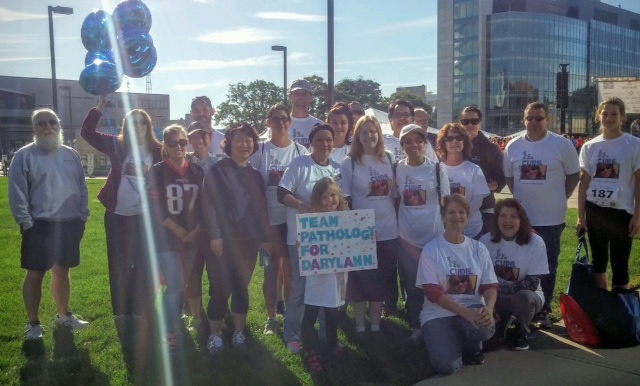
  • CANCER WALK Congratulations to participants of this year’s cancer walk! The roughly thirteen thousand participants this year have raised nearly $400,000 for cancer research and care. 20150927_093855.jpg

  • OTHER UNIONS, OTHER HOSPITALS The Kaiser Permanente Union Coalition has recently ratified a new contract agreement. The coalition represents over 100,000 healthcare employees, primarily in states along the west coast. This group of unions coordinates the largest Labor Management Partnership in the country. SHARE has been watching Kaiser Permanente closely, and in particular their “Unit-Based Teams” approach, which is designed to put employees directly in charge of important work-design decisions. Among other things, the new KP agreement includes:
    • Increased funds for employee training programs and for members’ tuition reimbursement,  
    • Increased training and accountability for frontline managers, and
    • New tools and support to increase the effectiveness of the Unit Based Teams
You can find even more highlights from the Kaiser Permanante agreement online, and read more about the effectiveness of the Labor Management Partnership in this report out of MIT.

  • INNOVATIONS in HEALTHCARE The Legal Services Corporation recently announced that Community Legal Aid in Worcester, Massachusetts will receive a 24-month $209,524 Pro Bono Innovation Fund grant to develop a partnership with UMass Memorial Medical Center. The model will address legal needs that can negatively impact the health of low-income and minority communities and interfere with healthcare providers’ ability to improve the health of these patients.

  • FREE SPEECH at WORK In national news, an NLRB complaint against Quicken Loans could redefine the rules of free speech in the workplace, reports the Detroit Free Press. The case is likely to have implications for social media. The ruling is expected to uphold current standards, including that "employees have a ... right to discuss wages, hours, and other terms and conditions of employment with fellow employees, as well as with non-employees, such as union representatives." Meanwhile, the US Department of Labor has continued its emphasis on employee rights with a Worker Voice Summit, which will underscore the value of worker organizing and collective bargaining, as a new #starttheconvo initiative invites frontline voices from around the country into that conversation.

  • happymoose.jpegMOOSE! SHARE members are now using ICD-10 coding guidelines in our hospital. The new codes allow for far greater precision, including for those patients receiving care as a result of “Burn due to water-skis on fire, initial encounter (V91.07XA),” or even less-likely conditions. At the time of this publication, our research team has not yet uncovered a code for “Incident with urban moose in Worcester County,” although we hear that a moose has been recently seen on our local streets. Drive safe.

See you here next Friday. Hope you have a great weekend.


Thursday, October 1, 2015

Raise Reminder (and a Correction)

The SHARE pay raise will be reflected in the pay period that begins this weekend. For more details, please see this previous blog post about raises. 

(And apologies that that post needed correcting: due to the Columbus Day holiday at the beginning of that week, the first paycheck to include your new pay rate will come on Friday, October 16th, one day later than we originally printed.) 

ICD-10 Goes Live

Many SHARE members have been working very hard to prepare for today. We wish you well this week! It’s been years coming, and, as you’ve probably heard, the ICD-10 coding system goes live today, in healthcare facilities around the country, including our own hospital. The current 19,000 codes used to define healthcare diagnoses, treatments, and procedures will expand to cover 142,000 unique codes.

It will be a big transition, and transitions always involve unknowns. But SHARE coders couldn’t be better prepared, and we’re well-situated to take good care of our hospital.

Kathy Girouard (pictured), a member of the SHARE Executive Board, and a coder in the Heart and Vascular Interventional Laboratory (HVIL), explains that the job has always been difficult, and misunderstood. “A lot of my friends outside the hospital don’t understand what I do at all. Sometimes they even ask me, ‘Kathy, what do you do all day with codeine?’ The whole idea of coding is new to them.”

“When you’re doing the kind of coding that I do, you basically have to decipher a physician’s notes to figure out what they did with the patient. You end up having to understand procedures almost like you’re the doctor,” Kathy says with a laugh.

Coders at UMass Memorial have invested a lot of their time preparing for the new coding system. Some have likened it to speaking an entirely new language. A recent article in Scientific American, “Why You Should Care About the New Major Changes in Medical Billing,” explains that the new codes are often extremely specific. For example, the new codes can pinpoint more precisely the location of bone and tendon injuries, or the particular trimester of a pregnant patient.

The information is necessary to properly reimburse the hospital for the care it provides. The massive overhaul has some industry analysts worried that reimbursements will be delayed, or that errors will leave hospitals with some services unpaid altogether. Some physicians in other hospitals worry that treatment authorizations could be delayed, too. The Centers for Medicare and Medicaid Services, anticipating some confusion, has pledged to honor valid insurance claims that are within the right category, even if the specific code isn’t exactly right.

“We’re as ready as we can be,” Kathy Girouard says of the coders. Although that job title is now a hot commodity on the job market, SHARE members plan to use their years of experience to transition and implement the new coding system right here. Many have trained intensively for hours each week for the past two years.

The short-term effect of the new codes will likely involve some confusion throughout healthcare. However, in the long-term, the compilation of more specific data is expected to lead to better understanding of some medical conditions, breakthroughs in treatment, and better diagnosis of problems within healthcare delivery itself. We’re looking forward to using the new knowledge to take even better care of our patients, and proud of the work that SHARE members have done to get us here.